
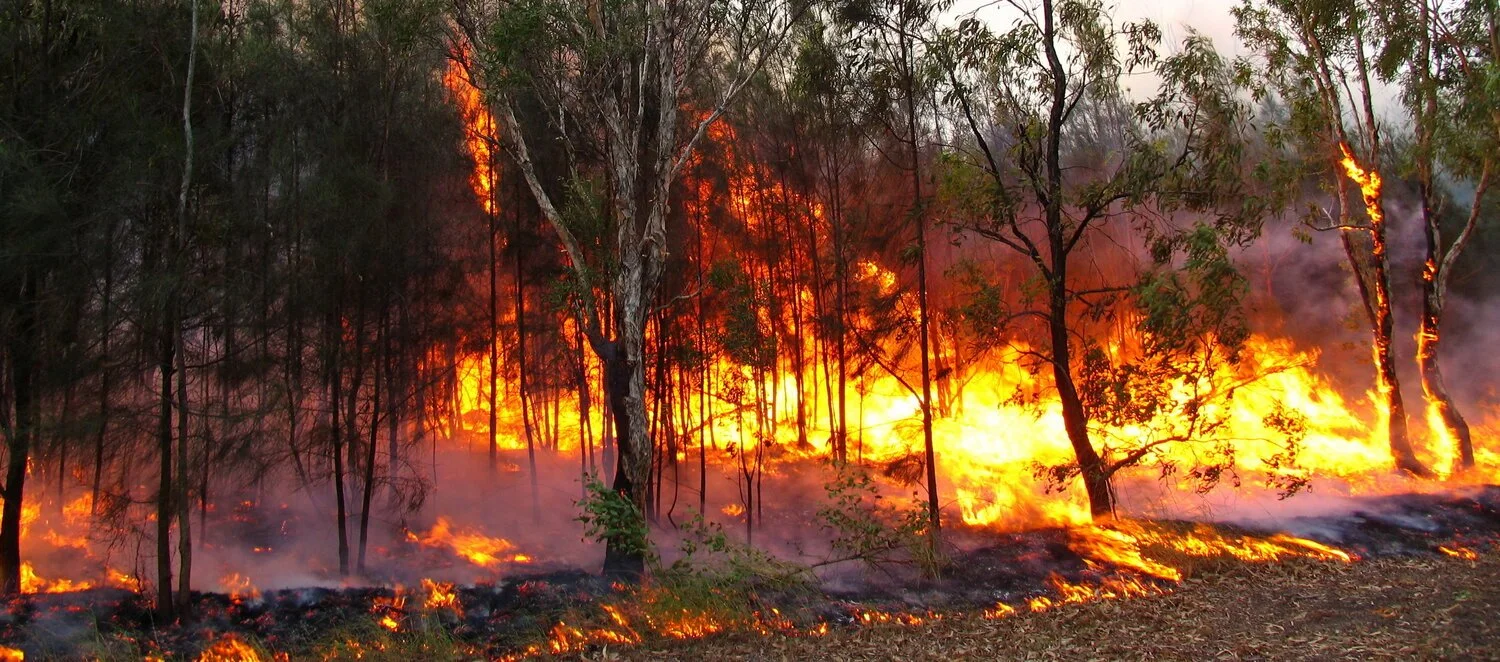
You don’t have to have seen much of the news lately to know we are in the middle of natural disasters – drought and fire.
These have gripped the nation’s attention because of their magnitude and the effect on people. The media coverage has been substantial. I wanted to write down a few thoughts for your consideration while thinking about and praying for our nation.
A Call for Compassion and Mercy
The scale of the bushfires is significant. No one should say these are small matters before us. This is a difficult time for Australia – many people have been affected. Even those who haven’t had bushfires at their door have been breathing smoky air for weeks. These tangible realities bring the nature of the disaster closer for most Australians.
Added to the proximity of the fires is the reality they are both lethal and out of human control. These kinds of words from the authorities are particularly haunting: “Emergency services may not be able to help you if you decide to stay.” The nature of what is happening stokes our fear, and fearful people often get angry and strikeout.
A few weeks ago a grass fire started in a paddock not far from where I live; there was a possibility we would have to evacuate (some at the end of our street did). It was hot and windy, and the smoke enveloped the surrounding community. The fear the fire was too big for the authorities was palpable. I wasn’t anxious about the potential loss of property; I was anxious about my family – I have four sons in my charge and I needed to make sure they were OK.
We ought to be compassionate and merciful to people affected by these fires because God is compassionate and merciful, and He calls us to be like Him.
The LORD is gracious and merciful, slow to anger and abounding in steadfast love. The LORD is good to all, and his mercy is over all that he has made.
Yet for some, the presence of this devastation and trouble argues against God’s mercy and compassion. They might say that if He were truly compassionate and merciful, He would stop these fires. But that assumes the only expression of God’s compassion and mercy which counts is rescue from this situation. It also assumes God starts from zero in the compassion and mercy category, which is far from the truth. God is far more generous and compassionate on a day by day basis than we give Him credit for. Our sin has rendered us undeserving of anything good. So, anytime we get anything good – houses, education, helicopter evacuations, food, every breath of fresh air – we need to realise it is because of the mercy, compassion and grace of God.
Because of the LORD’s great love we are not consumed, for his compassions never fail. They are new every morning; great is your faithfulness.
A Sealed, Self-contained Narrative
The climate change narrative which has reached a crescendo in these disasters has trapped us in a self-contained, closed system. We are the ones who caused this disaster and we are the ones who need to get ourselves out of it. And we are trapped because we are faced with a situation larger than anyone can manage.
God seems eerily absent from the conversation our culture is having. In all of my reading, watching and listening to the news I haven’t heard anyone complain about God and the injustice of the disasters – I have scarcely heard anyone say they are praying for those in trouble. What I have seen is a highly politicised natural disaster, lots of blaming, and a bunch of anger.
It appears that when you give God a leave pass from your culture and something bad happens, it is the government’s job to save you. I am not being partisan or arguing for or against climate change, I am wanting to highlight how the current self-contained, people-centred narrative has painted us into a corner.
I wouldn’t mind hearing a few people blaming God for this disaster, not because I think it is His fault, but just to hear He has a part in the conversation. The Psalmists seemed to think bringing God into the middle of their pain was a good idea, even if they felt they had a bone to pick with Him.
Humanity has never lived in a self-contained bubble. Even if the situation we find ourselves in is largely our fault, we still do not live in a closed system. Genesis 1 teaches us there is a Lord of creation who is in but not of the world. Like a superhero movie (but in real life), there is a being outside of our system, who we can talk to about the trouble we are in. He is the one who can rescue us, and He is the one we should cry out to. God’s nature is to have mercy on those in trouble and those who bring trouble upon themselves. If He wasn’t that kind of person, we would all be in strife.
We should cry out to God for an end to these fires and an end to the drought. But even more so, we should ask God to move in people, in such a way that they cry out to Him in their trouble. We should pray that our nation would not be further fragmented by turning on and blaming one other (something inevitable in a closed, human-centred system).
Compassion, mercy and trust are the way out. Compassion and mercy to those around us, and trust in God. We humans are accustomed to controlling things. From health to technology, we are used to using our strength and intelligence to exercise dominion over creation. We don’t find ourselves in uncontrolled situations very often (even though they can be particularly helpful in leading us to trust God in ways we wouldn’t otherwise).
Let’s pray for our nation to respond well with trust, compassion and mercy.
Are the Fires the Result of Sin?
In a general sense, yes. When humanity turned their back on God, the sin they committed affected every created thing. It didn’t just break humanity, it broke creation too. We see the beginnings of this in the curse on the land at the fall of humanity (it would grow thorns and thistles – Genesis 3:18). Paul also writes of the travail of creation in Romans 8:22,
“For we know that the whole creation has been groaning together in the pains of childbirth until now.”
When creation heaves and groans it ought to remind us of our sin and lead us to repent.
What’s the good news of this situation? Though fires rage, and we don’t have control, a kind, compassionate and merciful God does and we can turn to Him, cry out to Him, and take refuge in Him.
Praying for you and our nation.
No one after lighting a lamp covers it with a jar or puts it under a bed, but puts it on a stand, so that those who enter may see the light. Jesus